Tu Mero Mole Menu & Regional Specialties
From mole poblano to dishes associated with Yucatán and Jalisco, Tu Mero Mole introduced diners in San Jose to a variety of regional Mexican specialties. These menu highlights draw on food reviews and reporting published between 2011 and 2021.
A menu that crossed Mexico’s regions
Tu Mero Mole earned its place in San Jose dining coverage not by limiting itself to one familiar style of Mexican food, but by introducing dishes associated with several regions. Reports describe a small dining room and a kitchen led by Maria Flores that placed Puebla’s mole, Yucatán-style pork and preparations associated with Jalisco alongside tortillas, tacos, sopes and an unusually varied collection of salsas. Those descriptions are more useful than a recreated menu graphic: they identify what independent writers actually encountered and help explain why the restaurant attracted attention.
Two especially informative sources are Stett Holbrook’s January 19, 2011 review for SanJose.com and KQED’s 2014 South Bay Mexican restaurant guide. Their accounts were published at different moments, so they should not be mistaken for a fixed menu that remained unchanged throughout the restaurant’s life.
Mole poblano: the best documented signature
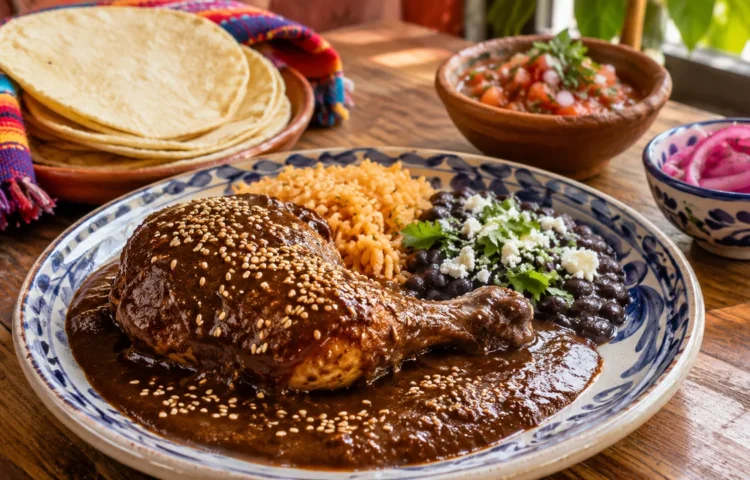
Mole poblano is the dish most consistently attached to the restaurant’s name in the surviving coverage. The 2011 SanJose.com review discussed a sauce with heat, bitterness and measured sweetness, served with chicken. The later KQED guide again described mole poblano as the signature and noted that it appeared either with chicken or as Enchiladas Tu Mero Mole. A 2016 SanJose.com food guide featured the mole platter with chicken, rice, beans and fresh tortillas.
These are observations made by independent reviewers, not a verified house recipe. Mole poblano is sometimes casually characterized as a chocolate sauce, but that description misses the purpose of chile, seeds, nuts, spices and slow cooking. Different households and restaurants take different approaches, and the proportions matter. An archive can document what the restaurant was known for without pretending to know which ingredients its kitchen used on a particular day.
For an educational explanation of this broader culinary tradition, read Mole Poblano: Ingredients, Flavor, and a Living Tradition.
Cochinita Yucateca: a Yucatán reference
The 2011 review singled out cochinita Yucateca, a preparation associated with the Yucatán Peninsula. Its account described pork seasoned with achiote, citrus and chiles and cooked with banana leaf. KQED’s later guide also listed cochinita Yucateca and described slow-roasted pork wrapped in banana leaves. The precise method used by the restaurant cannot be fully reconstructed from a review; what can be established is that this dish was part of the food journalists remembered.
It was significant in context. A neighborhood Mexican restaurant could be a place for diners to encounter preparations different from the familiar taco-and-burrito shorthand. Regional names on a menu can invite questions: Where does this dish come from? What is the importance of the marinade, wrapping or cooking method? The archive does not need to settle every culinary variation to preserve that point of discovery.
Cabrito from Jalisco and other regional specialties
SanJose.com’s 2011 review also identified cabrito al estilo los altos de Jalisco, described as roast goat prepared in a style associated with the highlands of Jalisco. Time Out’s San Jose Mexican food guide, published in 2021, later summarized the restaurant’s range by mentioning goat from Jalisco, pork from Yucatán and mole from Puebla. These are independent descriptions of what writers found notable, not proof that every dish was available every day or in every year.
Including dishes from different states was consistent with the restaurant’s documented identity: Maria Flores was interested in introducing diners to less familiar regional cooking. The 2011 reporting on the restaurant’s beginnings also described her goal of offering quality and reasonably priced food emphasizing specialties from different parts of Mexico.
Tacos, handmade tortillas and sopes
Regional specialties appeared alongside everyday favorites. The 2011 SanJose.com review mentioned small tacos on freshly made tortillas with a restrained garnish of onion and cilantro. It also described sopes: thicker masa bases topped with beans, chicken, cheese and crema. These details help convey the kitchen’s range without inventing a complete menu structure or new dish names.
Tortillas and masa are not background elements. They affect texture, portion, aroma and the way a filling meets salsa. The choice between a thin, flexible tortilla and a thicker sope changes the character of a meal even when the same beans, meat or chile are involved. Our separate guide to corn tortillas and salsas explains how these building blocks fit together across Mexican cooking.
The salsa bar in contemporary descriptions
One memorable detail appears repeatedly: variety in the salsas. The 2011 SanJose.com review described a selection including roasted chile with tomatillo and a spicy peanut sauce. KQED’s guide highlighted the salsa bar without providing a permanent inventory of all its offerings. Time Out also noted the peanut version. That agreement across sources supports the impression that salsa was a distinctive part of the meal experience.
Salsas are more than interchangeable heat levels. Roasting, acidity, texture, seed or nut content and freshness can make them complementary rather than simply hotter or milder. But the old reviews do not disclose the restaurant’s exact recipes, so this page deliberately avoids presenting recreated formulas as authentic Tu Mero Mole originals.
What food writers recorded
Supported by reporting: the restaurant’s association with mole poblano, enchiladas, cochinita Yucateca, cabrito, tacos, sopes and a notable salsa selection. Not independently established: a complete original menu PDF, all historical prices, current prices, restaurant hours, allergen guidance, availability of a particular dish today, proprietary recipes or unpublished kitchen procedures.
The distinction matters because a published restaurant review is a snapshot. It represents the reporter’s visit and perspective; it does not substitute for the restaurant’s original documents. If an attributable archived menu is found in the future, it can be assessed separately and added with its date and provenance.
Sources and further reading
- SanJose.com — Review: Tu Mero Mole (January 19, 2011).
- SanJose.com — Green Shoots (April 6, 2011).
- KQED — South Bay Mexican restaurant guide (2014).
- SanJose.com — Under-the-Radar Mexican Dishes (June 28, 2016).
- Time Out — Mexican food in San Jose (July 22, 2021).
Continue to Tu Mero Mole in the Press for the chronology of coverage, or read the restaurant’s regional dining story. Return to the Tu Mero Mole homepage.
Continue exploring
Return to the Tu Mero Mole homepage or discover more stories in the food and culture collection.