How Mexican Food Stories Live Online: From Restaurants to Digital Culture
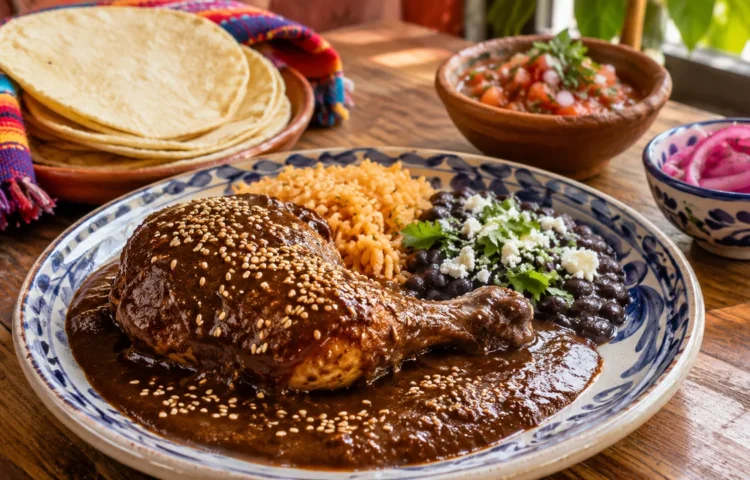
A good mole takes days. The chiles get toasted one by one. The seeds, spices and chocolate get ground and simmered until the sauce turns dark and glossy. Nobody writes down the moment a cook decides it’s ready. That moment lives in the cook’s nose and hands, and it usually leaves the room with them.
That’s the strange problem with food history. The thing itself gets eaten. What stays behind is paper and pixels. A review. A photo. A TV segment. A line in a city guide. For a small family restaurant, that thin trail can end up being most of what the public ever knows about it.
This site follows one such trail, the published record of Tu Mero Mole in San Jose. Newspaper and online reporting from its early years describe regional dishes, the people behind the counter and a business that grew from catering into a dining room. That record is valuable. It also has limits. It isn’t permission to invent menus, opening hours, recipes or quotes from the owners. So the rule here is simple. If it was published, we can point to it. If it wasn’t, we don’t make it up.
What an old review can keep
Restaurant reviews are easy to dismiss as opinion. Look at them a few years later, though, and they turn into records.
SanJose.com’s January 2011 review describes a modest room and co-owner Maria Flores’s focus on regional cooking. A few months later, a 2011 profile titled “Green Shoots” looked at the practical choices behind opening a small place. Neither piece was written as history. Both now work as history, because they pin down dates, dish names and early decisions that nobody would remember precisely otherwise.
KQED’s South Bay Mexican dining guide adds another angle. It mentions mole poblano, enchiladas, regional specialties and a salsa bar. A guide like that tells you what stood out to an outside eater at a given time. That’s different from what the kitchen thought mattered most. Both views are useful. Neither is the whole story.
Independent reporting beats marketing copy for one reason. Someone with no stake in the business wrote down what they saw, and put a date on it.
A photo is a choice
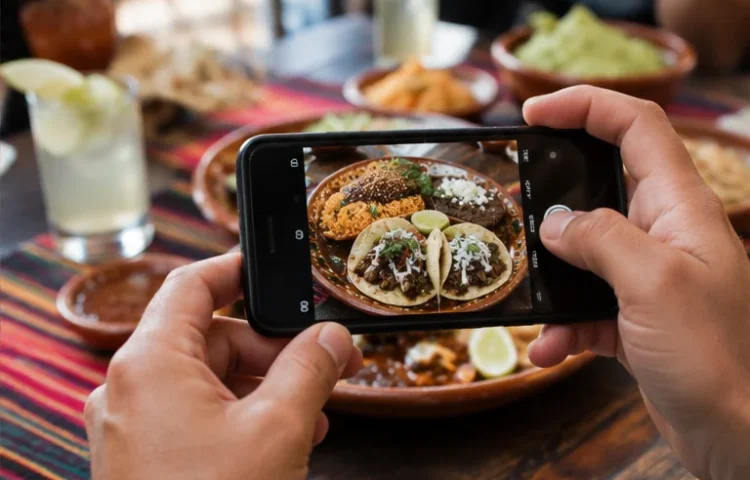
Food photos do a lot of work. They show the red of a salsa, the char on a tortilla, the way a plate was arranged. Sometimes a photo tells you more in one second than a paragraph does in a minute.
But every food photo is edited, even before software touches it. Someone chose the angle. Someone moved the napkin. Someone waited for the steam. And there’s plenty a picture can’t show. It can’t list every ingredient. It can’t tell you whose grandmother the recipe came from. It can’t tell you whether the place was still good on a busy Saturday three years later.
That’s why archives have to be careful. A generic stock photo of enchiladas shouldn’t sit on a page in a way that suggests it shows a specific restaurant’s food. Historical photos need a source, a date where possible and permission to reuse them. When in doubt, linking to the original is often safer than copying the picture.
A recipe is the smallest part
When people think about preserving food culture, they usually think of recipes. Write it down, save it, done. It isn’t that simple.
In 2010 UNESCO added traditional Mexican cuisine, described through the Michoacan paradigm, to its Representative List of the Intangible Cultural Heritage of Humanity. The listing barely talks about recipes at all. It talks about farming, about cooks passing knowledge to the next generation, about markets, festivals and whole communities taking part. The food is the visible end of a long chain.
Think about corn. Before a tortilla exists, dried corn gets cooked with lime and soaked, a process called nixtamalization that’s thousands of years old. Then it’s ground into masa, pressed and cooked on a hot comal. A recipe can list those steps. It can’t teach you how the dough should feel in your palm when it’s right. Our guide to corn tortillas and salsas goes into more of that groundwork.
The same goes for sauces. A cook knows a chile is toasted enough by smell and colour, and a few seconds too long turns it bitter. That’s judgment, and judgment is hard to write down. Our piece on mole poblano looks at that famous sauce from Puebla as just one member of a much bigger family of moles.
Museums that put food online
Some of the best food history on the web comes from public institutions. They have the collections and the researchers. Increasingly they also share them for free.
The Smithsonian’s National Museum of American History offers a large body of online food-history material that ties objects, everyday meals and wider history together. Its Mexican Food Revolution exhibit looks at how Mexican and Mexican American food spread across the United States. It covers how recipes moved with families, and how products like tortillas and salsa found their way onto supermarket shelves.
Google Arts and Culture has a different style. Its Taste Mexico collection gathers ingredients, kitchen tools and regional traditions into online exhibits and stories from partner institutions. You can lose an afternoon in it, moving from cacao to clay pots to market photos from Oaxaca.
What these collections get right is the path through them. Timelines, glossaries and sensible links help a reader move from one piece of evidence to the next. That kind of organising doesn’t happen by accident. It’s editorial work, and it’s as important as the content itself.
How screens change the way we find food
Food sites today use all sorts of tools. Searchable archives. Maps of regional dishes. Photo galleries. Step-by-step cooking videos. Online exhibits that let you click through a market stall. Most of it is built to work on a phone, because that’s where people are when they get hungry.
Some of these tools are genuinely helpful. A gallery of dried chiles with accurate names and notes on heat can teach more than a long essay. A short video of tortilla dough being worked shows the change in texture better than any description. A review that links back to its original publication lets readers check the source for themselves.
Other tools get in the way. Heavy animations slow pages down. Pop-ups and loud buttons pull attention off the story. Features with nothing to do with food just clutter the page. When the extras outweigh the substance, the food story gets harder to follow.
Done well, interactive digital experiences can make food history easier to understand, especially when their purpose is clearly educational, like a map of where different moles come from or a timeline of a family business. They should never hide commercial links inside what looks like an exhibit. And they shouldn’t suggest that a museum, a restaurant or a cook endorses something they don’t.
What the record can’t tell us
It’s worth being honest about the gaps. A handful of reviews is not a full history. People remember the same meal differently. Opening hours change. Menus get rewritten. A dish a critic loved in 2011 may have changed or vanished by 2013.
The web is fragile too. Sites go offline. Links break. Photos get separated from their captions and lose their meaning. Anyone building a food archive has to accept that some of the story is already gone.
This collection relies on public reporting. It is not the owners’ site, and it doesn’t claim the restaurant is open or taking orders. Our historical dining story lays out what the published record actually says.
Finding your way around
The Tu Mero Mole editorial homepage is the best place to start. It introduces the documented history and points to guides on ingredients and techniques. Where you go next depends on what you’re curious about. Come for flavour and start with mole. Come for local history and read the 2011 reviews. Come for how food gets shown in media and browse the food and culture collection.
Every link on these pages should answer a question a reader is likely to have. If it doesn’t, it shouldn’t be there.
A record, not a replica
What made a restaurant like this special was never just the dishes. It was the people, the room, the neighbourhood and the food all at once. No website can bring that back, and it would be wrong to pretend otherwise.
So the aim here is narrower and more honest. Keep the published record straight. Mark clearly what is documented and what is general background. Don’t fake menus or reopen a dining room in pixels. If that works, this collection becomes a decent starting point for anyone curious about Mexican food history, in San Jose and beyond. You can find more pieces like this one on our blog.
Selected sources
Continue exploring
Return to the Tu Mero Mole homepage or discover more stories in the food and culture collection.